Sub-Zero maintenance is a short list of owner jobs kept on a schedule: vacuum the condenser every six to twelve months, change the water filter yearly or at 750 gallons, wash the door gaskets, and clean any undercounter ice maker. None of it needs more than a vacuum, a soft brush and mild soap, and together these jobs slow the gradual decline that ends with a warm cabinet or soft ice.
The condenser comes first
The condenser is where a built-in sheds its heat, and a dusty one makes the compressor run longer. Sub-Zero puts the interval at six to twelve months; a dog or cat in the house pulls it toward the short end. On Classic (CL) units the coil sits behind the flip-up grille; on Designer (DET, DEC) units, two screws hold a kickplate that covers it.
Power the refrigerator down from its own control panel first, wear gloves, and vacuum with a soft brush attachment, moving along the fins rather than across them so the aluminum does not fold. Skip chemical coil cleaners; the maker calls them unnecessary and advises against them. Homes near the water in St. Augustine collect salt film on the fins faster, which is why our note on reading a condenser argues for the short end of that range.
Filters on a calendar
Classic and Designer filters last up to twelve months or 750 gallons (2,839 L), whichever arrives sooner. Change it sooner if the indicator asks, if dispenser flow falls off, or if cubes come out hollow. With a new filter in, run the dispenser for two minutes; where there is no dispenser, the first two full bins of ice go down the sink.
Units with air purification take cartridge 7042798, the direct replacement for 7007067 and the only air filter in the refrigerator. It lasts about a year. The cartridge holds a mercury lamp, so the old one goes out under your local disposal rules, not in the kitchen trash.
Gaskets, stainless and the inside
Turn the unit off before washing a door gasket, then use mild detergent and water on a soft cloth. A baking soda paste lifts tough stains, and a 1:10 mix of bleach to water handles mold or mildew. Vinegar and rubbing alcohol stay away from the seals.
Stainless panels take a nonabrasive stainless cleaner on a soft lint-free cloth, wiped with the grain. Inside the cabinet, soap, water and baking soda are enough. The same mild mix cleans the water dispenser opening and drip tray.
Ice makers and wine storage
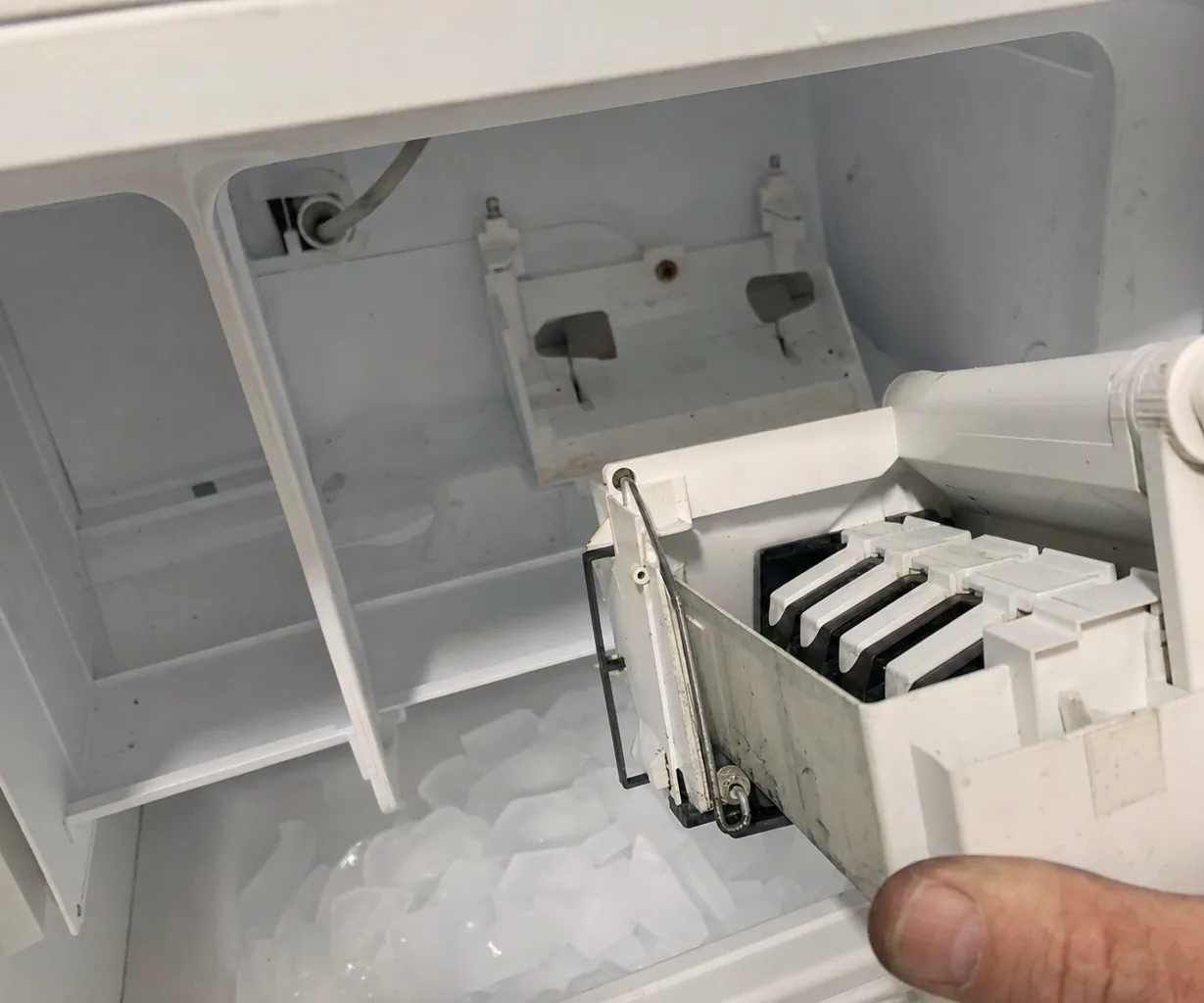
A UC-15I undercounter ice maker needs a clean-and-sanitize every six months. Touch CLEAN, empty the bin, pour in 4 ounces (115 ml) of cleaner when the light flashes, then run the cycle again with 1 tablespoon (15 ml) of sanitizer. Each pass takes about 30 minutes and cannot be stopped once started, so begin when you have the time. Its condenser sits behind the kickplate and wants cleaning on the same six-month rhythm. Its filter, part 7042803 (formerly 7012333), is changed every six months or when the red REPLACE FILTER light comes on; press CLEAN for 6 seconds afterward to reset the light.
The Designer Series undercounter ice maker is cleaned at startup and then every three to six months, depending on how hard the water is. For wine storage running warm, clean the condenser if three months have passed since the last time, then give the unit 24 hours to settle.
What a technician visit adds
Owner care keeps the coil, seals and water clean. A service visit goes further: temperatures measured against the set point, fans and compressor listened to under load, the defrost system checked, and early signs of refrigerant trouble looked for. One threshold from Sub-Zero is worth remembering: a refrigerator reading above 48 degrees while set at 38 is unlikely to recover from a condenser cleaning, so call for service instead.
Typical ranges here are $240–$640 for a door gasket and $260–$570 for an evaporator or condenser fan motor; the firm figure comes after the $80 diagnostic. The pricing page lists the rest.