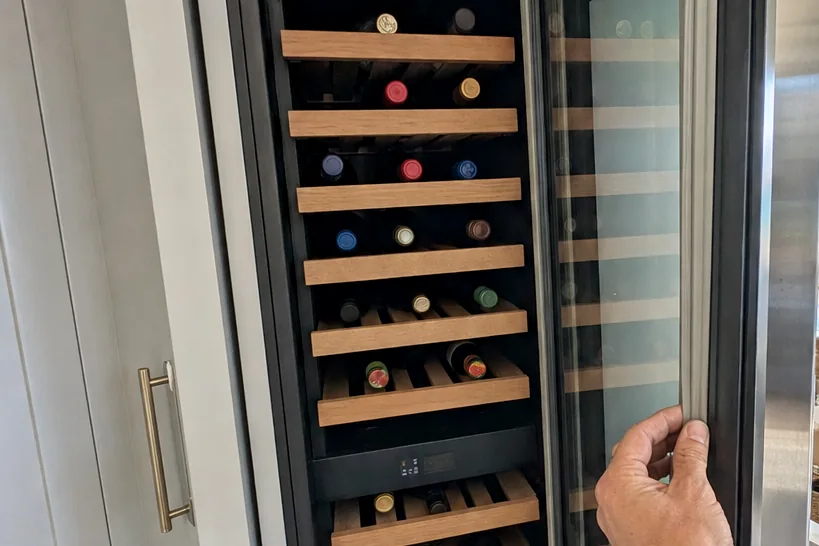
A good many houses on Anastasia Island and in the streets behind the Old City stand empty for part of the year. The owners set the thermostat somewhere tolerable, close the shutters, and leave. The refrigeration keeps running, because turning it off feels like the riskier choice.
Sometimes it is. Often it is not, and the difference is worth thinking through before you go rather than discovering it on the drive back.
The problem is humidity, not temperature
A closed house on a barrier island in August is warm and very damp. Air conditioning set high — eighty degrees, say, to keep the bill down — removes far less moisture than the same system removes at seventy-four. What is left is an interior that is comfortable for mould and hard on anything with a door seal.
That is what actually degrades over an empty summer. Not the compressors: the seals, the interiors and the drains.
Three appliances, three different answers
The ice machine. If the house will be empty for more than a fortnight, turn it off, empty the bin, and let it dry with the door propped. Ice left in a bin does not simply melt; it sublimates, refreezes, and fuses into a single mass that will take the chute or the auger with it when somebody tries to break it out. A dry, open bin is the single highest-value thing on this list, and it costs nothing.
Wine storage. Leave it running. A wine cabinet’s whole function is stability, and switching it off surrenders that for the sake of a small amount of electricity. What is worth doing is checking the door seal before you go: a gasket that has taken a set, or a heavy glass door that has dropped on its hinge, will admit humid room air all summer and put water on the inside of the glass and a smell in the cabinet that no cleaning afterwards will fully settle.
Built-in refrigeration. This one is a judgement. Left running and nearly empty, a built-in cycles less, defrosts on schedule and comes to no harm — as long as nothing in it will spoil and nothing standing in the drain pan will go sour. Switched off, it must be switched off properly: emptied, cleaned, drains cleared, and both doors held open. A built-in shut off and closed for four months is a mould problem waiting for a homecoming.
If the house has a dual-refrigeration cabinet and you are leaving it running, take the run-time reading described in our note on condensers before you go. It gives you a baseline to compare against when you return.
What we would look at before you leave
Condenser fins first, particularly in 32080 and 32084. Salt air films aluminium and starts the corrosion that closes the gaps between the fins, and a summer of running with a restricted condenser is a summer of unnecessary compressor hours. A cleaning before a long absence is worth more than the same cleaning after it.
Door seals second, on everything with a door. Every gasket in the house is about to spend months in contact with damp air.
Drains third. A drain that is slow while you are living in the house is a drain that will be blocked when you get back.
Coming back
Give the house an hour before you judge anything. A cabinet that has been closed and warm needs time, and a compressor that has been idle for months will run for a long stretch before it cycles for the first time — that is normal, not a fault.
What is not normal: a cabinet that has run continuously for a full day and is still not at its setting, an ice machine that fills and never harvests, a wine cabinet with condensation on the inside of the glass, or a smell that does not clear with the door open. Those are worth a call.
Weekdays 8:00 am to 6:00 pm, Saturday 9:00 am to 4:00 pm. The visit is a flat $80 diagnostic, credited toward the repair when you approve it, from an independent shop that works on Sub-Zero refrigeration only.